

Maintenance
How Cape Town's Climate Affects Your Car Battery's Lifespan
Mike JaurePublished 15 July 2026Last updated 28 July 20268 min read

Batteries don't fail randomly: climate plays a bigger role than you'd think
Most drivers assume a car battery simply "wears out" after a few years, as if time alone is the deciding factor. In reality, heat, humidity, and driving patterns all accelerate or slow down the chemical processes inside a battery. Understanding how Cape Town's specific conditions affect your battery can help you plan replacements before they become emergencies, and get more usable life out of the battery you already have.
Why heat is harder on batteries than cold
It's a common misconception that cold weather is the main enemy of car batteries. In reality, heat causes more long-term damage. High temperatures accelerate the chemical reactions inside a battery, which speeds up the natural degradation of its internal components. Over time, this leads to fluid evaporation, internal corrosion, and a shortened lifespan, even if the battery never shows obvious symptoms until it fails.
Cape Town's warmer months, combined with a car's engine bay temperature (which is always hotter than the ambient air), create exactly the conditions that wear batteries down faster than the manufacturer's estimate suggests.
Stop-start traffic and short trips
Cape Town's traffic patterns, particularly along routes into the city centre during peak hours, mean many batteries rarely get a full, uninterrupted charge. Short trips don't give the alternator enough time to fully recharge the battery after starting the engine, which places it in a near-constant state of partial discharge. Over months and years, this shortens the battery's effective lifespan considerably compared to a battery in a car that does longer, steadier drives.

Humidity, salt air, and coastal corrosion
Living close to the coast, as much of Cape Town does, adds another variable. Salt-laden air accelerates corrosion on battery terminals and connectors, which can create resistance in the electrical connection even when the battery itself is otherwise healthy. This is often mistaken for a failing battery when it's actually a terminal connection issue, which is why a proper inspection matters more than guessing.
Battery age and vehicle electronics
Modern cars draw more standby power than older models, thanks to alarms, trackers, infotainment systems, and various sensors that stay partially active even when the engine is off. Combined with heat and short trips, this means a battery that might have lasted 4-5 years in a simpler vehicle or milder climate may only manage 2-3 years under typical Cape Town conditions.
How to extend your battery's lifespan
A few habits can meaningfully slow down wear and tear:
- Park in shade where possible, especially during summer, to reduce heat exposure to the engine bay.
- Take longer drives occasionally if your routine is mostly short trips, to give the alternator time to fully recharge the battery.
- Clean terminals periodically, particularly if you're near the coast, to prevent corrosion build-up.
- Get the battery tested every 6-12 months, not just when problems appear, so you catch a decline before it becomes a breakdown.
When it's time to replace, not just maintain
Even with good habits, every battery eventually reaches the end of its useful life. The key is catching that point before it strands you somewhere inconvenient. A proper load test can tell you how much capacity a battery has left, giving you a realistic timeline rather than a guess.
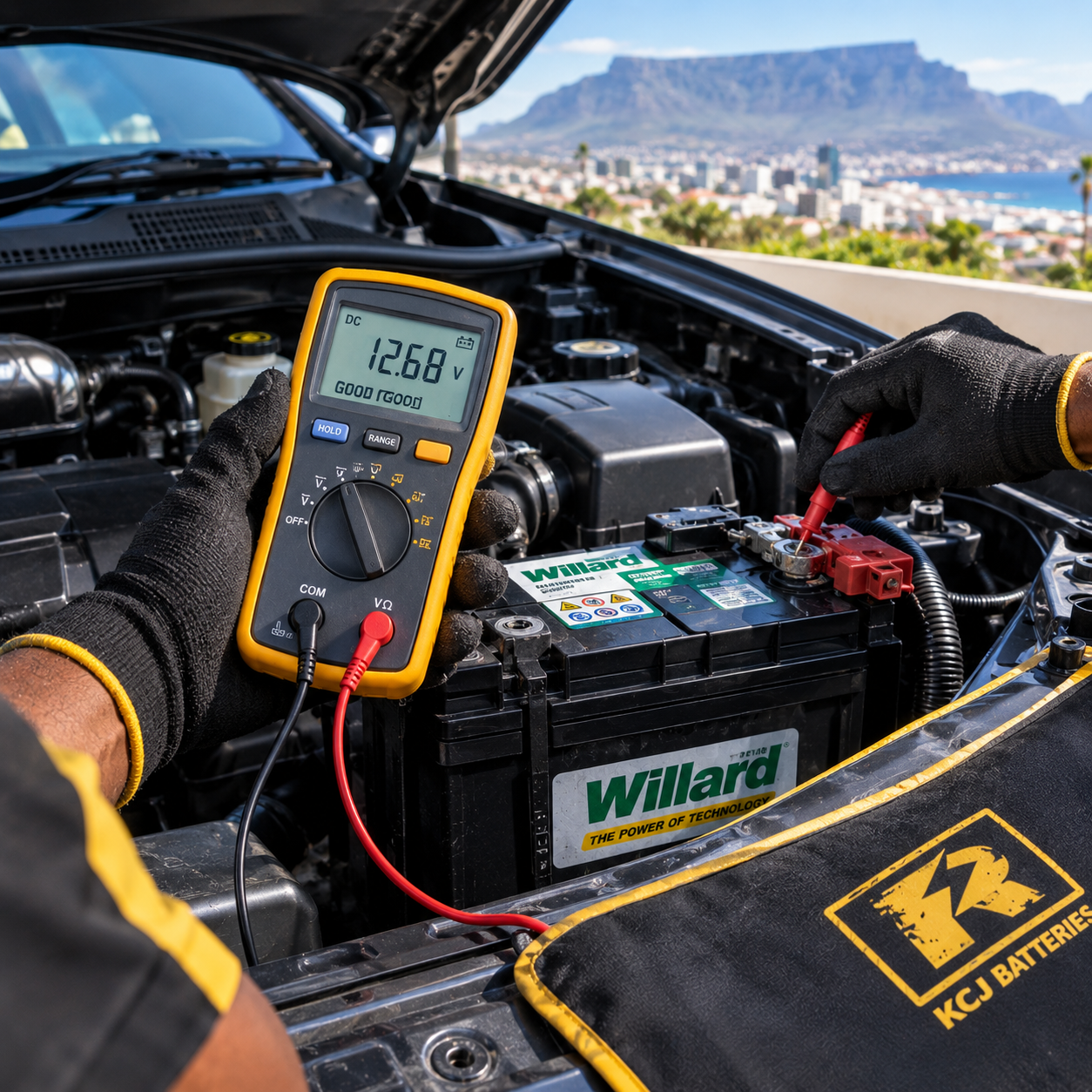
KCJ Batteries offers mobile battery health checks across Cape Town, testing your battery's actual condition on-site and fitting a replacement immediately if it's needed, with no need to plan around garage hours or availability.
Frequently asked questions
- Does heat really affect car batteries more than cold?
- Yes. Heat accelerates the internal chemical degradation of a battery, which is why warmer climates like Cape Town often see shorter average battery lifespans than the manufacturer's stated range.
- How often should I get my battery tested?
- Every 6-12 months is a reasonable interval, particularly once the battery is more than 2 years old.
- Can corrosion on terminals cause starting problems even with a healthy battery?
- Yes. Corrosion increases resistance in the electrical connection, which can mimic the symptoms of a weak battery even when the battery itself still has good capacity.
- climate
- heat
- lifespan
- corrosion


Author
Mike Jaure
@techtalkdev
Mike writes practical motoring guides for Cape Town drivers, covering battery failure, jumpstarts, and what to do when the car will not start.
Related posts
Replacement
How to Know When Your Car Battery Needs Replacing: A Cape Town Driver's Guide
Slow cranking, dashboard warning lights, a swollen case. Here's how to spot a dying car battery before it leaves you stranded, plus what Cape Town drivers can do about it.
Mike Jaure 8 September 2026 7 min read
Troubleshooting
Car Won't Start? A Complete Troubleshooting Guide for Cape Town Motorists
Dead battery, faulty starter, or something else entirely? Work through this step-by-step guide before you call for help, and know exactly when to call a mobile mechanic.
Mike Jaure 22 August 2026 8 min read
Mobile service
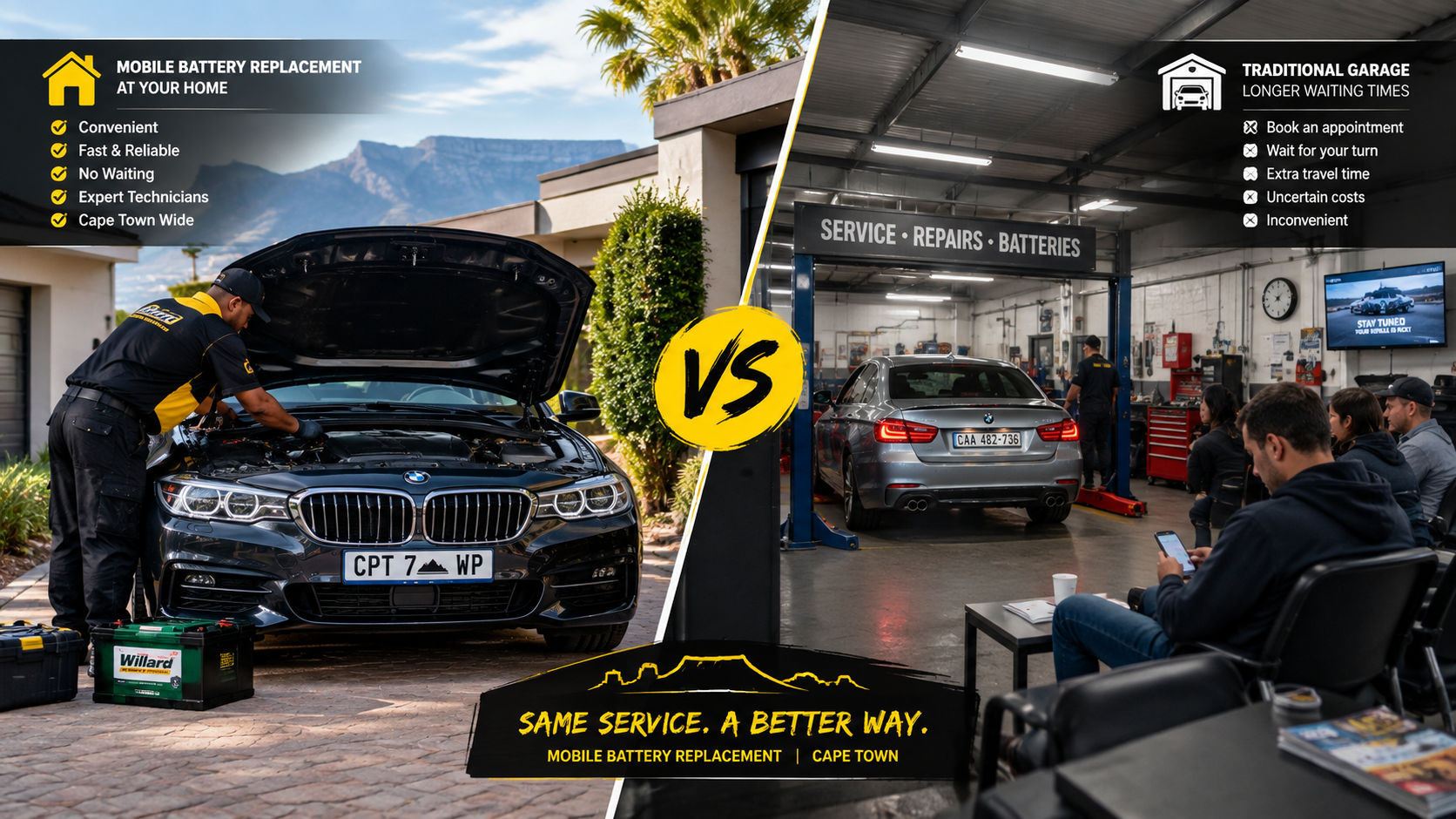
Mobile Battery Replacement vs. Garage Visits: Why Cape Town Drivers Are Switching
No more towing, no more waiting rooms. Here's an honest comparison of mobile battery replacement versus traditional garage visits, and why more Cape Town drivers are choosing mobile.
Mike Jaure 4 August 2026 7 min read