

Jumpstart
Jumpstart Safety 101: What Every Cape Town Driver Should Know
Mike JaurePublished 28 June 2026Last updated 5 July 20268 min read
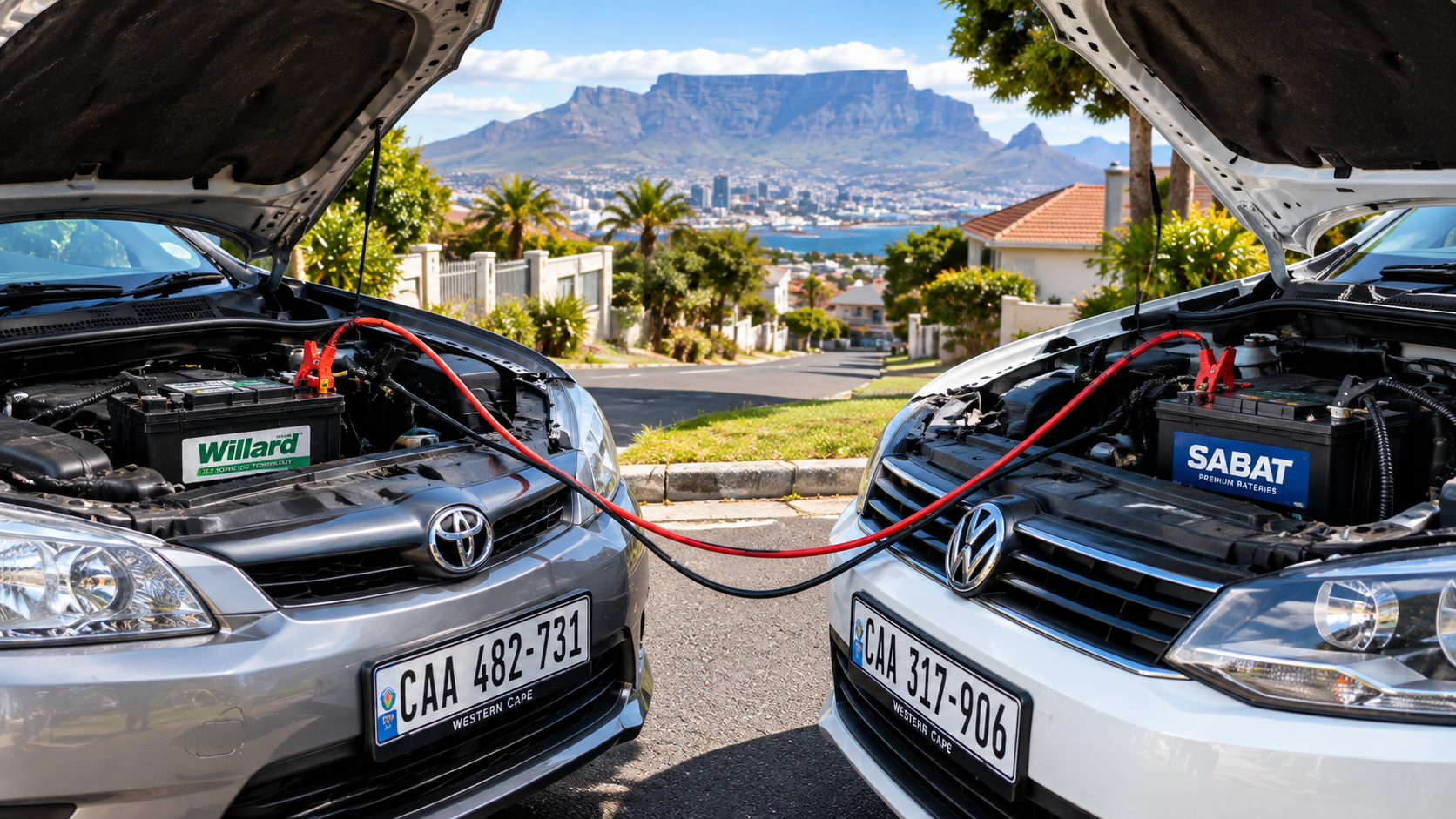
A jumpstart sounds simple, until you've done it wrong
Jumpstarting a car is one of those tasks everyone assumes they know how to do, right up until they're standing between two open bonnets trying to remember which cable goes where. Get the order wrong, and at best you'll fail to start the car. At worst, you can damage sensitive electronics in either vehicle, particularly in newer cars packed with computer modules.
This guide walks through the safe, correct process, along with the situations where it's genuinely better to call for professional help instead.
Before you start: check for damage
Before connecting anything, take a moment to inspect the battery. If it's leaking, cracked, swollen, or smells strongly of sulphur, do not attempt a jumpstart. A damaged battery can be dangerous to work with, and the safer move is to call a mobile technician rather than risk it.
Step 1: Position the vehicles
Park the working vehicle close enough that the jumper cables can comfortably reach both batteries, but make sure the vehicles aren't touching. Switch off both engines and engage the handbrakes.
Step 2: Connect the cables in the correct order
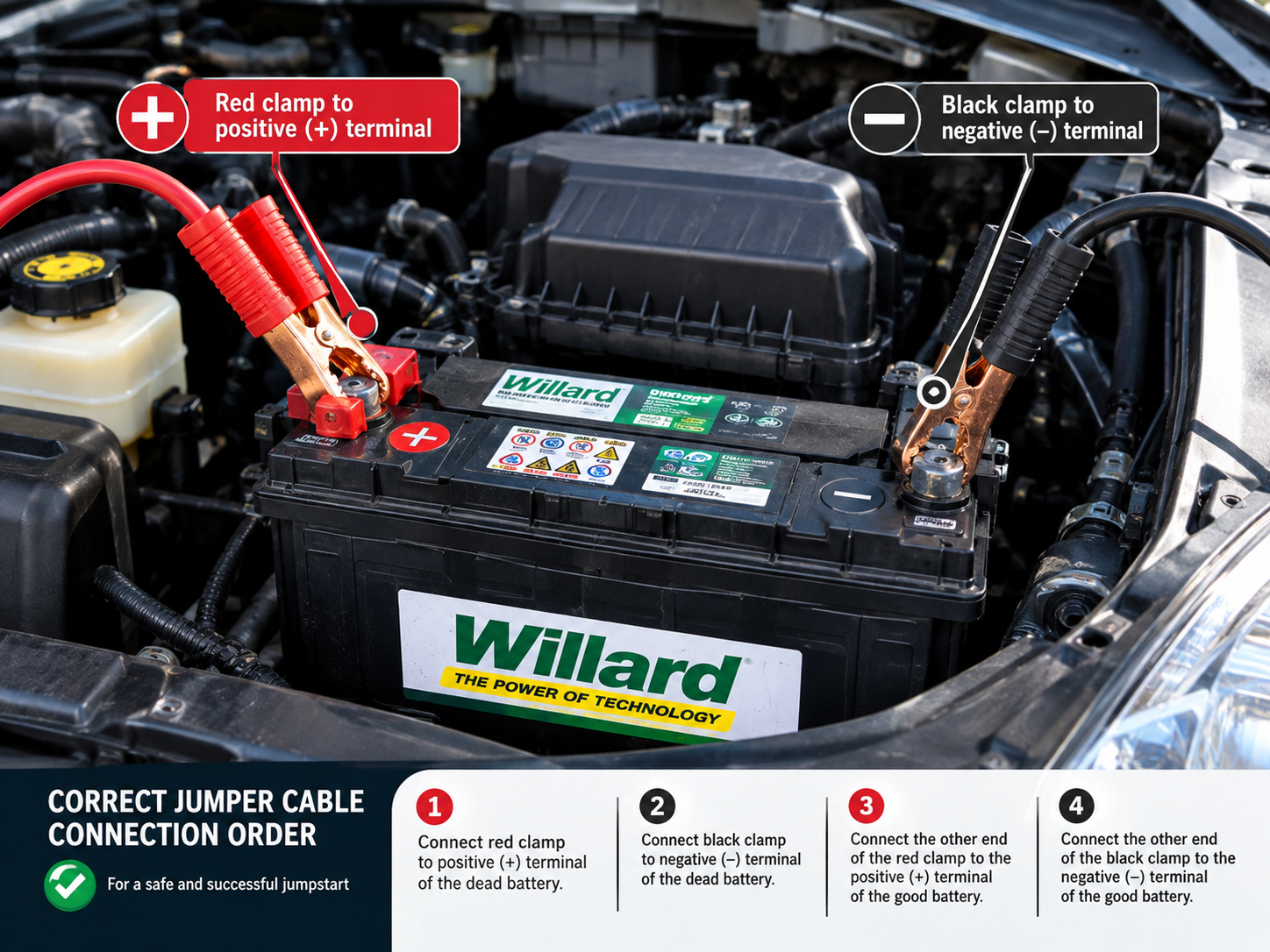
This is the step most people get wrong. The correct sequence is:
- Red (positive) clamp to the positive terminal of the dead battery.
- Red (positive) clamp to the positive terminal of the working battery.
- Black (negative) clamp to the negative terminal of the working battery.
- Black (negative) clamp to an unpainted metal surface on the dead car's engine block or chassis, not directly to the dead battery's negative terminal.
That last point surprises a lot of people, but connecting the final clamp away from the battery itself reduces the risk of sparks near the battery, where hydrogen gas can be present.
Step 3: Start the working vehicle first
Let the working car's engine run for a couple of minutes before attempting to start the dead one. This allows some charge to transfer through the cables. Then try starting the vehicle with the dead battery.
Step 4: Remove the cables in reverse order
Once the dead car has started, disconnect the cables in the exact reverse order you connected them: black clamp from the chassis first, then black from the working battery, then red from the working battery, then red from the dead battery.
Step 5: Keep the engine running
After a jumpstart, avoid switching the engine off again immediately. Drive for at least 15-20 minutes, or let the car idle, to give the alternator a chance to recharge the battery. If the car struggles to start again shortly after, that's a strong sign the battery itself needs replacing rather than just a boost.
When a jumpstart isn't the right call
There are situations where jumpstarting yourself isn't the safest or most sensible option:
- You don't have jumper cables or another vehicle nearby.
- The battery looks damaged, swollen, or is leaking.
- You've already jumpstarted the same battery multiple times recently, it's likely failing, not just flat.
- You're not confident about the correct cable order.
- You're stranded somewhere isolated or after dark, where safety is a bigger concern than convenience.
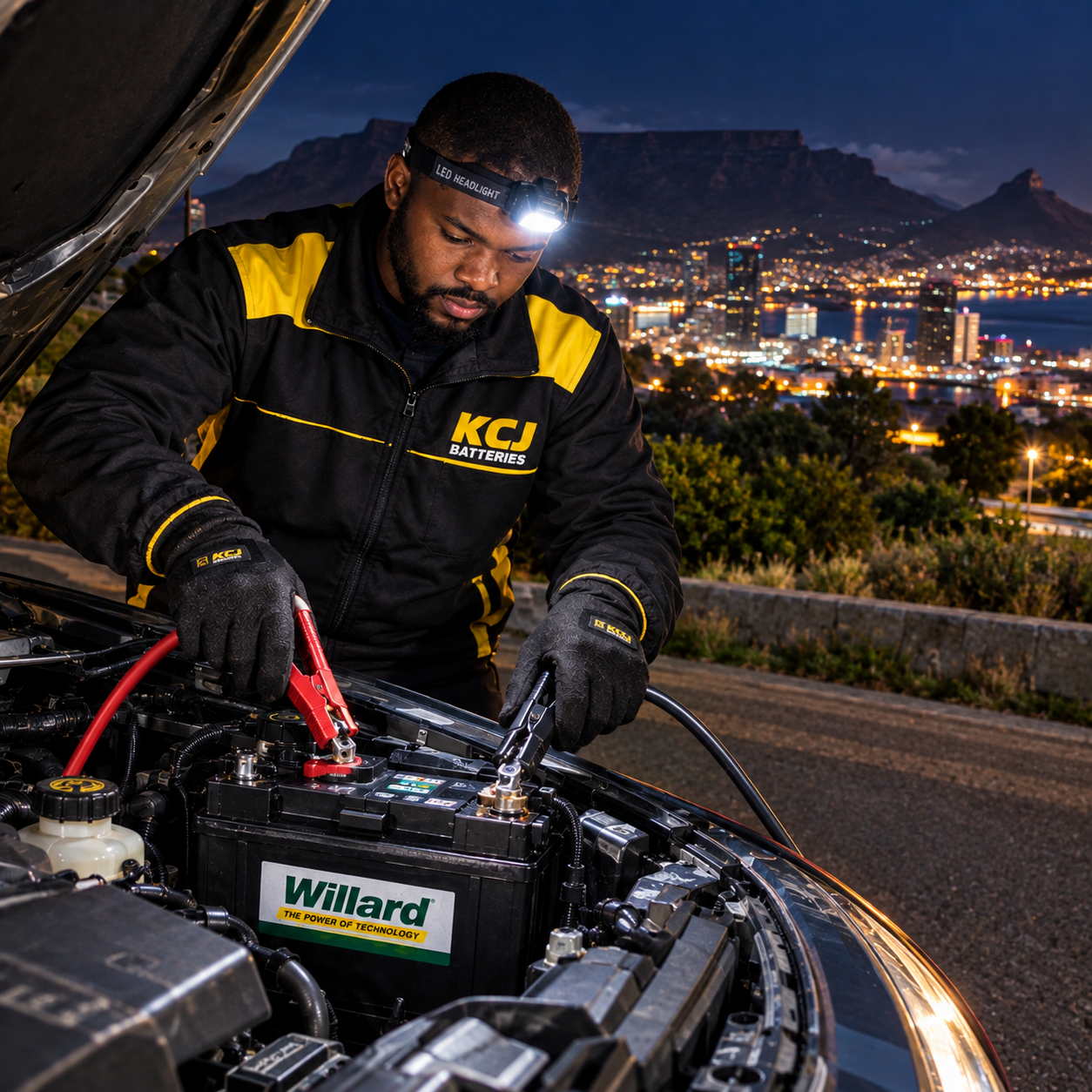
In any of these situations, calling a mobile technician is the safer route. KCJ Batteries provides 24/7 mobile jumpstarts across Cape Town, and if the battery turns out to need replacing rather than just a boost, our technicians carry stock to fit a new one on the spot.
Frequently asked questions
- Which terminal do I connect first when jumpstarting a car?
- Always start with the positive (red) terminal on the dead battery, then the positive terminal on the working battery, followed by the negative (black) terminal on the working battery, and finally an unpainted metal surface on the dead car, not its battery terminal.
- Can jumpstarting damage my car?
- If done in the wrong order, yes, it can damage sensitive electronics, particularly in newer vehicles. Following the correct sequence significantly reduces this risk.
- How do I know if my battery needs replacing instead of just a jumpstart?
- If the same battery keeps needing a jumpstart within days of the last one, it's no longer holding charge properly and should be tested and likely replaced.
- jumpstart
- safety
- cables
- emergency


Author
Mike Jaure
@techtalkdev
Mike writes practical motoring guides for Cape Town drivers, covering battery failure, jumpstarts, and what to do when the car will not start.
Related posts
Replacement
How to Know When Your Car Battery Needs Replacing: A Cape Town Driver's Guide
Slow cranking, dashboard warning lights, a swollen case. Here's how to spot a dying car battery before it leaves you stranded, plus what Cape Town drivers can do about it.
Mike Jaure 8 September 2026 7 min read
Troubleshooting
Car Won't Start? A Complete Troubleshooting Guide for Cape Town Motorists
Dead battery, faulty starter, or something else entirely? Work through this step-by-step guide before you call for help, and know exactly when to call a mobile mechanic.
Mike Jaure 22 August 2026 8 min read
Mobile service
Mobile Battery Replacement vs. Garage Visits: Why Cape Town Drivers Are Switching
No more towing, no more waiting rooms. Here's an honest comparison of mobile battery replacement versus traditional garage visits, and why more Cape Town drivers are choosing mobile.
Mike Jaure 4 August 2026 7 min read